
🧩 Common Misconceptions About Trauma
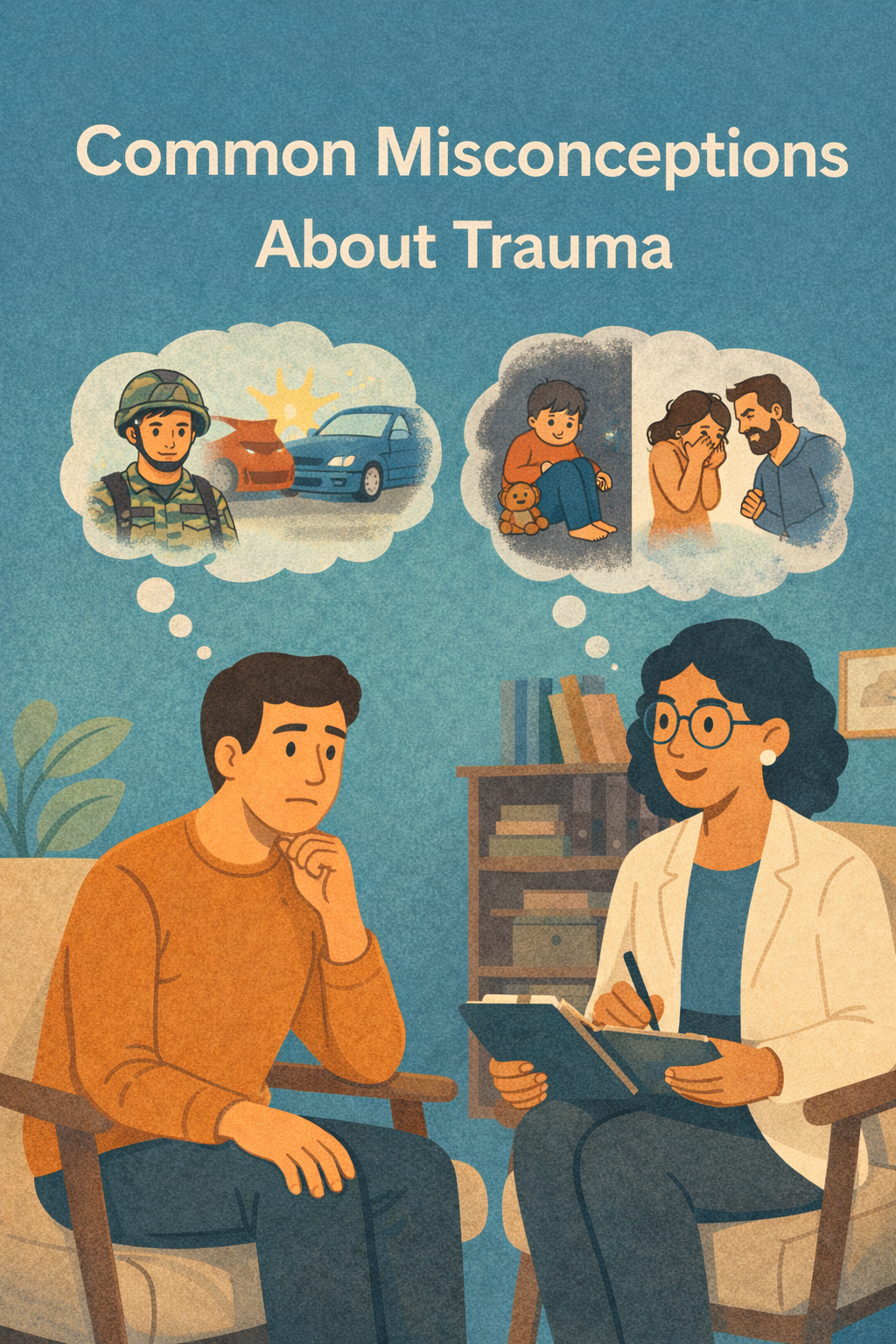
Trauma is often misunderstood, minimized, or stereotyped. Learn the most common misconceptions about trauma, what trauma really looks like, and how therapy can support healing.
Introduction: Why Trauma Is Misunderstood
The word “trauma” gets used a lot — on social media, in conversations, and in the news. But despite trauma being widely discussed, it’s still widely misunderstood. Many people assume trauma only happens in extreme scenarios or that it always looks dramatic from the outside.
In reality, trauma is deeply personal. Two people can go through the same event and have completely different responses. As therapists serving Crown Point, Merrillville, and Northwest Indiana, we see every day how misunderstandings about trauma can prevent people from seeking support.
Let’s clear up some of the most common misconceptions.
❌ Misconception #1: “Trauma only comes from life-threatening events.”
When people think of trauma, they often picture:
War or combat
Serious accidents
Natural disasters
Violent assaults
These are absolutely traumatic events — but they’re not the only ones.
Trauma also includes experiences like:
Emotional neglect
Divorce or abandonment
Chronic criticism or humiliation
Growing up in chaotic or unpredictable environments
Medical procedures
Bullying
Parentification (being forced into adult roles as a child)
Trauma is not defined by the event itself — it’s defined by how the event impacts the nervous system, emotional safety, and sense of self.
❌ Misconception #2: “If it happened a long time ago, it shouldn’t affect you now.”
Trauma doesn’t operate on the same timeline as memory.
The brain stores traumatic experiences differently, especially if they happened during childhood. Many adults don’t connect present symptoms (like anxiety, people-pleasing, or emotional numbness) to past trauma until therapy helps them make sense of it.
Time doesn’t heal trauma — processing does.
❌ Misconception #3: “If you don’t remember it clearly, it must not have been traumatic.”
Traumatic memories can be:
Fragmented
Blurry
Suppressed
Somatic (stored in the body rather than explicit memory)
This is especially true for individuals who experienced trauma:
Before age 7 (when the brain is still developing memory systems)
During dissociation
In emotionally unsafe environments
Trauma often shows up as symptoms, not memories.
Those symptoms can look like:
Chronic shame
Overthinking
Relationship struggles
Emotional numbness
Hypervigilance
Panic attacks
Difficulty trusting others
Trauma doesn’t need to be remembered perfectly to be real.
❌ Misconception #4: “Only weak people are affected by trauma.”
This couldn’t be further from the truth.
Trauma doesn’t discriminate. It impacts the nervous system, not personal strength.
In fact, many high-achieving, high-functioning individuals carry unprocessed trauma because they learned to perform, people-please, or overachieve as a survival strategy.
Strength isn’t avoiding help — it’s knowing when you need it.
❌ Misconception #5: “If you’re not crying or emotional, it’s not trauma.”
Trauma responses vary widely. Some cry. Some shut down. Some get angry. Some make jokes.
Common trauma responses include:
Fight (anger, aggression)
Flight (anxiety, avoidance)
Freeze (numbness, shutdown)
Fawn (people-pleasing, appeasing)
Many trauma survivors appear:
Calm
Collected
Successful
Organized
Especially if they learned to mask or stay “in control” to feel safe.
Just because someone isn’t visibly distressed doesn’t mean they aren’t hurting.
❌ Misconception #6: “Talking about trauma will make it worse.”
Avoidance is actually what makes symptoms grow stronger over time.
Processing trauma in a safe, controlled therapeutic environment helps the brain integrate the experience so it no longer controls thoughts, emotions, or behaviors from the background.
You don’t have to tell your trauma story all at once — and good therapists never force you to. Trauma healing is paced, gentle, and collaborative.
So… What Is Trauma Really?
Trauma is anything that overwhelms the nervous system’s ability to cope, leaving lasting emotional, physical, or relational effects.
It’s not about being dramatic. It’s about being human.
Healing begins when we stop comparing traumas and start validating our own experiences.
🌿 Take the First Step — From Anywhere
Whether you’re dealing with major trauma or subtle emotional wounds, you don’t have to do it alone. With telehealth therapy, you can receive support from a safe environment and on your own schedule.
📞 Call 219-351-0429 or email jacob.biancardi@catalystcounselingservices.net to schedule your first appointment for telehealth therapy in Indiana.
Support, healing, and growth are just one click away.
