
🤝 Introvert or Social Anxiety? Understanding the Difference
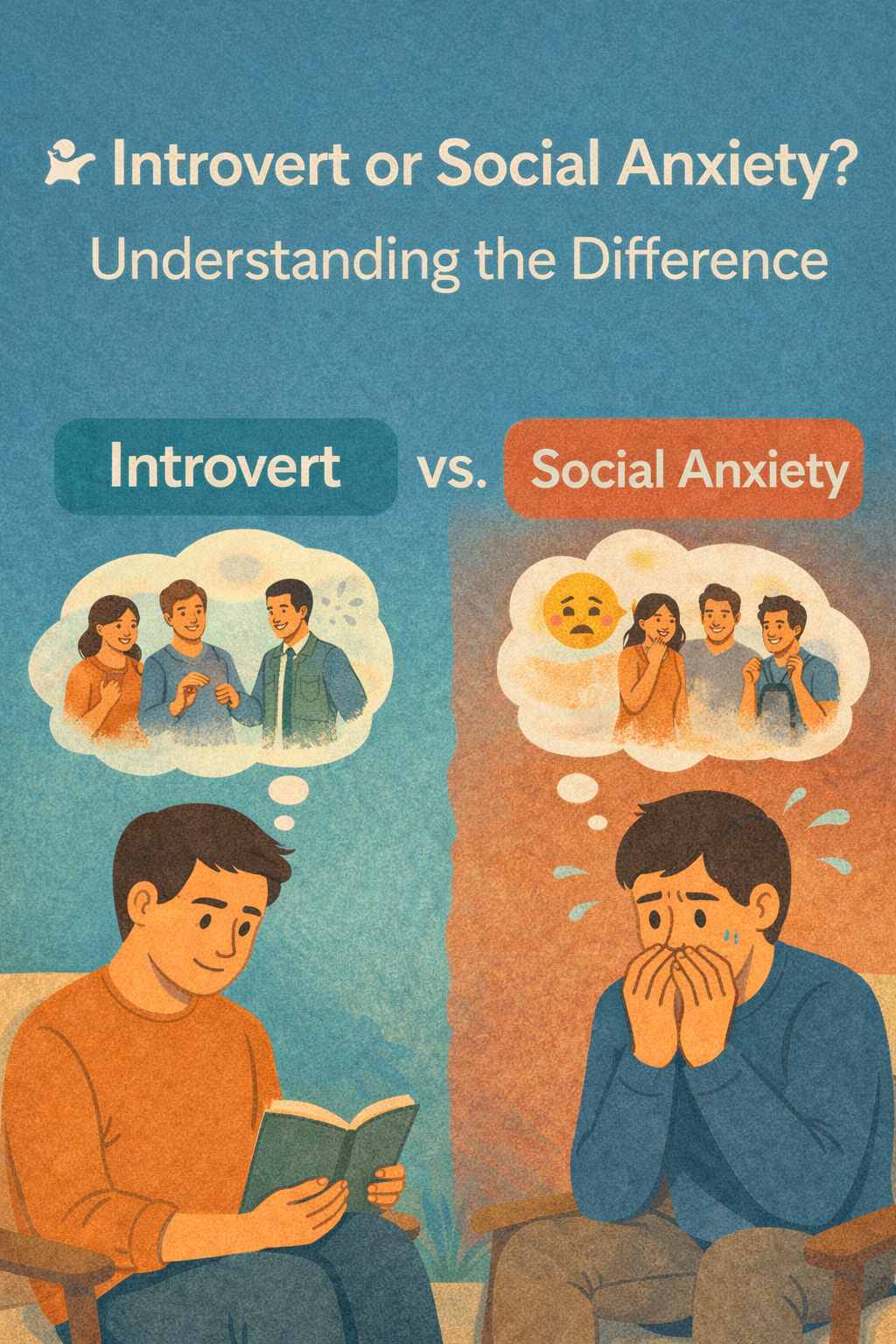
Not everyone who dislikes crowds has social anxiety. Learn the difference between introversion and social anxiety from therapists in Crown Point & Merrillville, Indiana — including signs to look for and how therapy can help.
Introduction: Why This Question Matters
We live in a world that often praises outgoing, social personalities — which can make quieter individuals wonder if something is “wrong” with them. It’s common to hear people say things like, “I’m just socially anxious,” when what they really mean is, “I prefer quiet environments.”
But here’s the truth: Introversion and social anxiety are not the same thing.
Confusing the two can prevent people from getting help — or from embracing personality traits that are perfectly healthy.
As therapists serving Crown Point, Merrillville, and Northwest Indiana, we regularly help individuals unpack this difference. Here’s what you need to know.
🧩 What Is Introversion?
Introversion is a personality trait, not a disorder. Introverts generally prefer:
Smaller groups or one-on-one interactions
Quiet, low-stimulus environments
Deep conversations over small talk
Time alone to recharge
Introverts can enjoy socializing, but it often drains their energy — so they need alone time afterward to feel balanced.
Key point: Introversion is about energy preference, not fear.
🧩 What Is Social Anxiety Disorder?
Social Anxiety Disorder (SAD) is a mental health condition involving:
Intense fear of being judged, embarrassed, or rejected in social situations
Physical symptoms (heart racing, sweating, shaking, nausea)
Avoidance of social situations due to fear, not preference
Persistent worry about how one is perceived
Common thoughts with social anxiety include:
“What if I embarrass myself?”
“Everyone will think I’m weird.”
“They’re judging me.”
“I’ll say something stupid.”
Key point: Social anxiety is about fear and avoidance, not energy preference.
🔍 The Core Difference: Preference vs. Panic
Here’s the simplest way to differentiate the two:
Introversion: “I’d rather stay home tonight, that sounds relaxing.”
Social Anxiety: “I’m terrified to go because I might mess up or be judged.”
Introverts enjoy socializing with the right people in the right environment.
People with social anxiety often want to connect, but fear gets in the way.
✨ Overlap That Causes Confusion
Some introverts also experience social anxiety, but many don’t. The overlap exists because:
Both may prefer smaller groups
Both may avoid loud or overstimulating environments
Both may dislike superficial interactions
The motivation behind the behavior is what matters.
Ask yourself:
“Am I avoiding this because it drains my energy — or because it scares me?”
If fear is the driving force, social anxiety may be playing a role.
📋 Common Signs of Introversion
Introverts often:
✔ Enjoy solitude
✔ Need time alone to recharge
✔ Prefer deep or meaningful conversations
✔ Enjoy socializing in familiar environments
✔ Feel drained after large events
They do not experience intense fear, panic, or humiliation around social interactions.
📋 Common Signs of Social Anxiety
People with social anxiety often:
❗ Worry for days or weeks before a social event
❗ Avoid situations due to fear of embarrassment
❗ Experience physical symptoms (blushing, shaking, nausea)
❗ Replay conversations in their head afterward
❗ Believe they are being judged or criticized
❗ Struggle to speak in groups or assert needs
Their world becomes smaller due to avoidance, not preference.
🌱 Why Understanding the Difference Matters
Labeling every quiet or thoughtful person as “socially anxious” isn’t just inaccurate — it’s harmful. It:
Pathologizes healthy personality diversity
Minimizes the seriousness of social anxiety disorder
Prevents introverts from embracing their strengths
Prevents anxious individuals from seeking treatment
Introversion is healthy. Social anxiety is treatable.
Understanding which one applies can change someone’s life.
🧠 Can You Be Both Introverted and Socially Anxious?
Absolutely — and many people are.
An introverted person may love small gatherings with friends but panic at work presentations. A socially anxious extrovert may crave connection but avoid it due to fear.
Humans are complex — which is why therapy can help sort this out.
💬 When to Consider Talking With a Therapist
You may benefit from therapy if social fears are:
Interfering with work or school
Making relationships difficult
Causing physical symptoms
Leading to avoidance or isolation
Creating distress or shame
Social anxiety responds well to CBT, exposure therapy, mindfulness, and other evidence-based approaches — including telehealth.
No one deserves to carry that fear alone.
🌿 Take the First Step — From Anywhere
Whether you’re an introvert seeking self-understanding or someone wondering if social anxiety is holding you back, support is available from home through telehealth therapy.
📞 Call 219-351-0429 or Book Online
to schedule your first appointment for therapy in Indiana.
Support, healing, and growth are just one click away.
