
🌧 Why Depression Isn’t Just Sadness
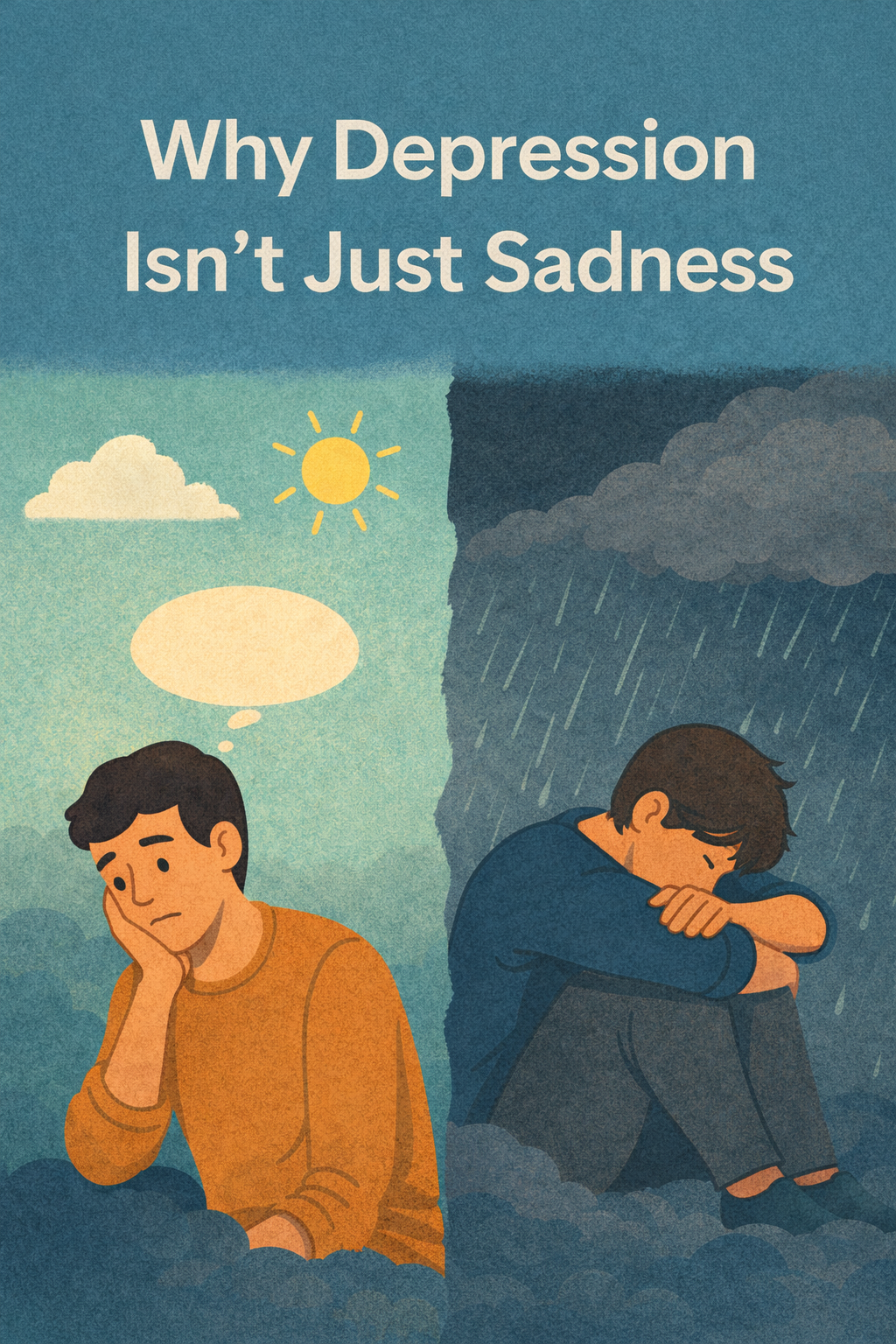
Depression is often misunderstood as “just sadness,” but it’s far more complex. Learn the difference between depression and sadness, the symptoms most people overlook, and how therapy can help.
Introduction: Why This Misunderstanding Matters
In everyday conversation, people use the word “depressed” to describe feeling sad, disappointed, or discouraged. But clinically speaking, depression is not the same as sadness — and confusing the two can make it harder for individuals to recognize when they need support.
As therapists serving Crown Point, Merrillville, and Northwest Indiana, we often meet clients who struggled silently for months or years simply because they believed their depression was “just sadness” they should push through.
Understanding the difference can change lives. Here’s why.
1. Sadness Is a Feeling — Depression Is a Condition
Sadness is a normal human emotion that comes and goes. It’s usually tied to a specific event, like:
A breakup
A disappointing outcome
A loss
A conflict
Sadness fades over time or when circumstances change.
Depression, on the other hand, is a mental health condition that affects how a person feels, thinks, and functions. It often shows up without a clear trigger and doesn’t just “go away” with time or positive thinking.
2. Depression Involves Emotional Numbness — Not Just Sadness
People with depression may feel sad, but they may also feel:
Numb
Empty
Disconnected
Hopeless
Irritable
Overwhelmed
Many describe depression as a loss of emotion, not an excess of it.
A common phrase we hear in therapy is:
“I don’t feel sad — I just don’t feel anything.”
This distinction matters, because emotional numbness often goes unnoticed by others (and sometimes even by the person experiencing it).
3. Depression Impacts the Body — Not Just the Mind
Depression isn’t only psychological — it affects the body, too.
Common physical symptoms include:
Chronic fatigue
Restless sleep or oversleeping
Appetite changes
Headaches or body aches
Slowed speech or movement
Low energy
Brain fog or difficulty concentrating
Sadness doesn’t typically disrupt sleep cycles, energy levels, or cognitive functioning — depression does.
4. Depression Changes Thought Patterns
Depression rewires how a person sees themselves and the world. It often brings patterns such as:
All-or-nothing thinking
Catastrophizing
Self-blame
Hopelessness about the future
Feeling like a burden
These thoughts aren’t a choice — they are symptoms.
Sadness may make you reflect or grieve, but it doesn’t typically create distorted thinking or long-term beliefs of worthlessness.
5. Depression Alters Daily Functioning
Depression interferes with day-to-day life in ways sadness doesn’t.
This might look like:
Struggling to get out of bed
Losing interest in hobbies or social events
Withdrawing from loved ones
Falling behind at school or work
Neglecting self-care
Sadness may make life feel heavier at times, but depression makes everyday tasks feel nearly impossible.
6. Depression Can Feel Invisible — But It’s Real
Because depression doesn’t always look like crying or sadness, it often gets missed. Many depressed individuals appear:
Cheerful
Productive
Put-together
Social
High-achieving
This is sometimes called high-functioning depression — and it’s one of the most misunderstood forms.
7. Depression Needs Support — Not Silence
One of the most harmful myths about depression is that people should “push through” or “cheer up.”
These responses can create shame and isolation, making symptoms worse.
Depression is treatable, but it requires compassion, understanding, and professional support — not advice to “be positive.”
The Bottom Line
Sadness is a feeling.
Depression is a condition.
Understanding the difference reduces stigma, increases empathy, and helps people get the help they deserve.
If you or someone you love is struggling with more than sadness — with numbness, exhaustion, negative thinking, or loss of interest — it may be something deeper. And there is absolutely no shame in getting help.
🌿 Take the First Step — From Anywhere
Your mental health matters, no matter how busy life gets. With telehealth therapy, you can receive care from home, work, or anywhere private — at a time that fits your life.
📞 Call 219-351-0429 or email jacob.biancardi@catalystcounselingservices.net
Support, healing, and growth are just one click away.
